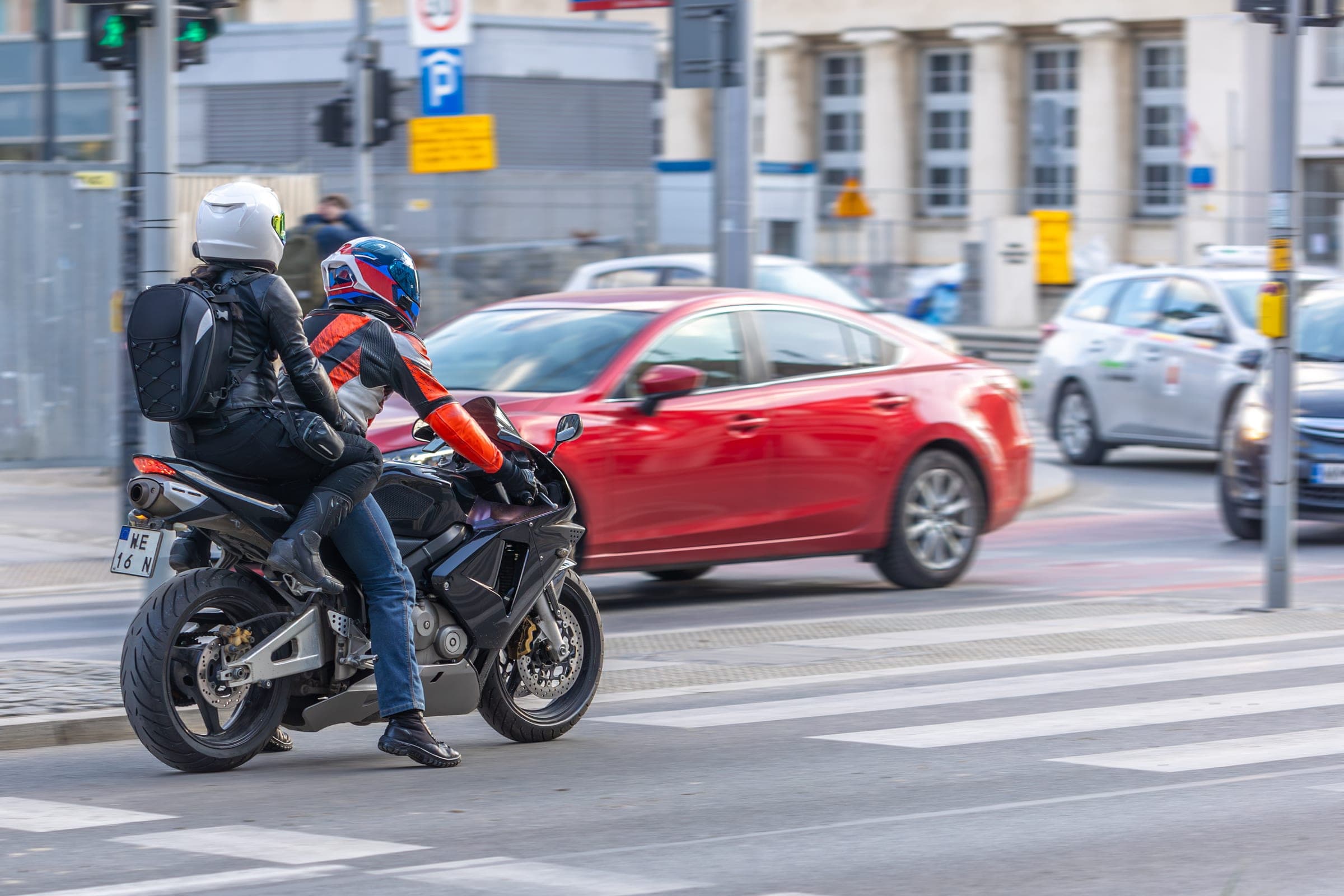
Riders & families
One helmet per head, every trip.
- Buy BIS-certified helmets for pillion and children
- Fasten the strap before starting
- Replace after any crash

Two-wheeler users were 46.2% of India's road deaths in 2024, and 54,122 people died not wearing a helmet. Here is the evidence, and what the law requires of riders and pillion passengers.
The World Health Organization says correct helmet use can reduce the risk of death in a crash by more than six times and the risk of brain injury by up to 74%. In India, 81,780 two-wheeler users died in 2024 — 46.2% of all road deaths — and 54,122 people who died were not wearing a helmet (MoRTH).
Section 129 of the Motor Vehicles Act requires every person above four years of age driving, riding or being carried on a motorcycle to wear protective headgear meeting the standards set by the Central Government (Sikhs wearing a turban are exempt). Since 1 June 2021, only BIS-certified helmets to IS 4151:2015 may be made or sold.

14,652
Pillion passengers who died without a helmet in 2024
A helmet only works if it is certified, fits, is fastened and is still in good condition.
Buy only BIS-certified helmets to IS 4151:2015 — mandatory since 1 June 2021. Cap-style and 'construction' helmets don't qualify.
It should sit level just above the eyebrows and not move when you shake your head.
Clip the chin strap every time. An unfastened helmet can come off in a crash.
Replace a helmet after any crash or hard drop, even if it looks fine.
2019
The MV Amendment Act covers everyone above four years on a motorcycle; Section 194D sets a ₹1,000 fine and three months' licence disqualification.
Nov 2020
MoRTH's Helmet (Quality Control) Order, S.O. 4252(E), makes BIS certification to IS 4151:2015 compulsory.
Jun 2021
The order takes effect on 1 June 2021 — non-certified two-wheeler helmets can no longer be made or sold.
Feb 2023
Children aged 9 months to 4 years must wear a crash helmet and safety harness, with speed capped at 40 km/h (notified Feb 2022, in force 15 Feb 2023).
Persons killed in road crashes while not wearing a helmet, from MoRTH's annual reports.
More than 1 in 4 was a passengerOf the 54,122 people who died without a helmet in 2024, 39,470 were riders and 14,652 were pillion passengers.
Source: MoRTH — Road Accidents in India 2022, 2023 and 2024.
India, 2022–2024 (drivers + passengers)
Myth: I'm only going a short distance.
Fact: The protection works on every trip: WHO says correct helmet use cuts the risk of death more than six times.
Myth: Pillion riders don't need one.
Fact: Section 129 covers anyone being carried on a motorcycle. In 2024, 14,652 pillion passengers died not wearing a helmet.
Myth: Any helmet is good enough.
Fact: Only BIS-certified helmets to IS 4151:2015 may be made or sold since 1 June 2021.
Myth: Small children don't need helmets.
Fact: Since 15 February 2023, children aged 9 months to 4 years must wear a crash helmet and safety harness, and the speed limit is 40 km/h.
One helmet per head, every trip.
Make the safe choice the default one.
Enforce for everyone on the bike.
WHO's helmet manual (2nd edition, 2023) sets out the laws, standards and enforcement that increase helmet wearing.
Figures on this page come from these public sources (checked September 2026).